T20 World Cup 2028 New Format: Everything That's Changed
Featured Gaming Portal
Ready to Play & Win Rewards?
Experience fast multiplier rounds, instant cashouts, and official certified fair play.
Provably FairInstant Cashouts
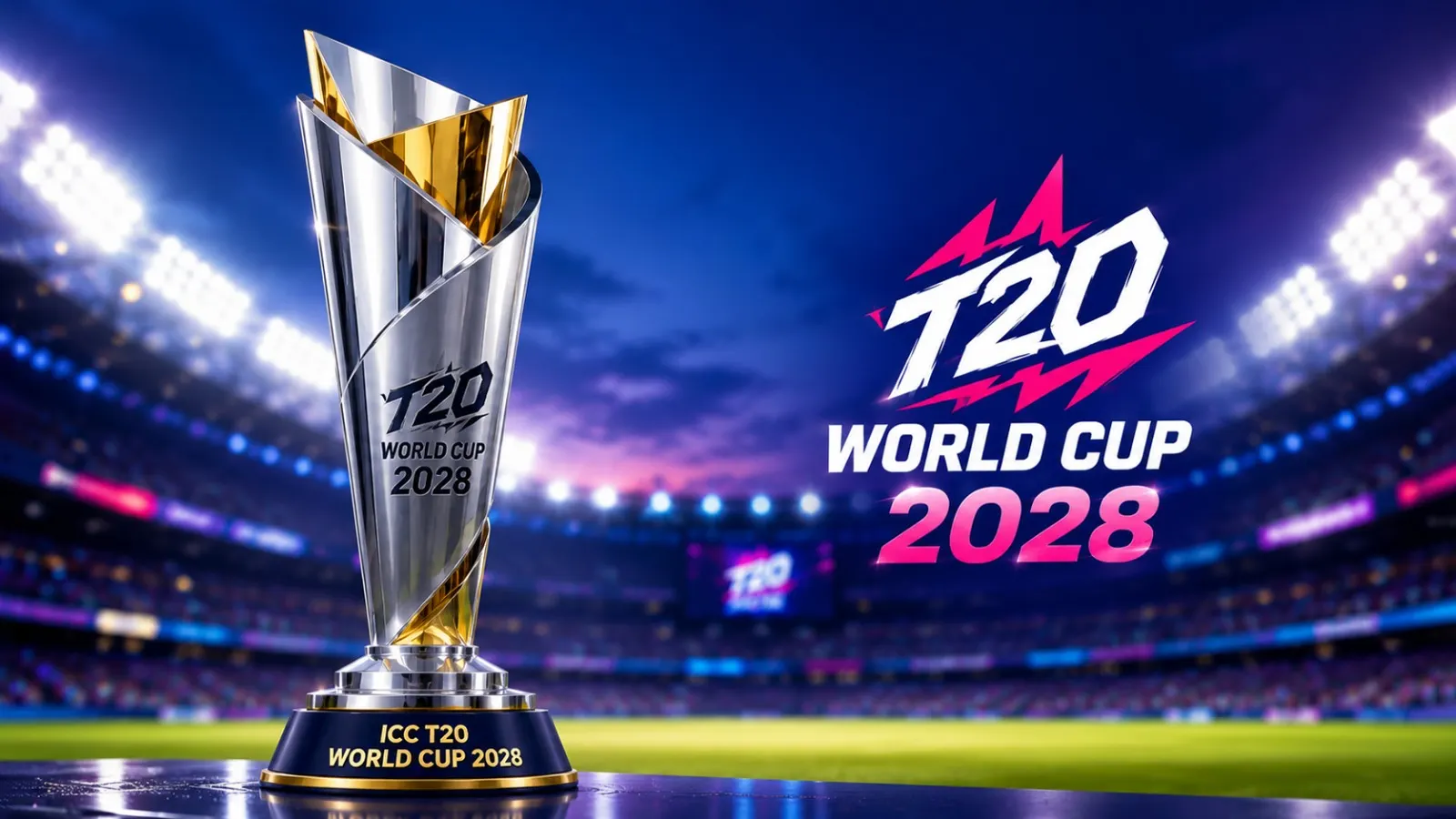
The ICC has confirmed the T20 World Cup 2028 new format, and it's a big change.
The announcement came on 15 July 2026, right after the ICC's Annual General Meeting in Edinburgh. The second round is now bigger, and a brand-new knockout phase has been added before the semi-finals.
Here's a simple breakdown of everything that's changed for the next edition.
T20 World Cup 2028 — Dates and Host Venues
The T20 World Cup 2028 Australia New Zealand event will see the two nations co-host the tournament together. This is the first time New Zealand will stage this tournament.
It will still involve 20 sides, just like the last two editions, and 55 games in total. India are the defending champions after winning the 2026 title.
T20 World Cup 2028 Group Stage Format Explained
The T20 World Cup 2028 groups format has changed. Before, there were four pools of five sides. Now there will be five pools of four sides.
All 20 participants are split into these five pools. Each side plays every other side in its pool one time.
This means there will be 30 opening-round fixtures in total, which is ten fewer than before. Only the top two from each pool move to the next round.
Almost every fixture will matter, and smaller cricketing nations get a fair chance to cause an upset.
T20 World Cup Super 10 — How the New Stage Works
Earlier, this round had 8 qualifiers and was called Super 8. Now it has 10 qualifiers and is simply called Super 10. The ICC widened this round because smaller nations played really well in the 2026 edition.
The 10 qualifiers are split into two pools of five. Every side plays every other side in its pool once.
This adds up to 20 fixtures at this stage — almost double the 12 games played earlier under Super 8.Only the side that finishes first in each pool goes straight to the semi-final.
he sides that finish second and third don't advance directly. They have to play one more game to prove themselves.
Super 8 vs Super 10 T20 World Cup — Key Differences
Number of qualifiers: The old Super 8 round had 8 sides. The new Super 10 round has 10 sides.
Pools: Super 8 ran as two pools of four. Super 10 uses two pools of five.
Fixtures: Super 8 produced 12 games. Super 10 delivers 20.
Who advances directly: In Super 8, the top two from each pool went straight to the semi-final. In Super 10, only the pool winner advances directly.
Why it matters: More nations get a chance to play more games and show their skills.
ICC T20 World Cup Eliminators — The New Knockout Round
These Eliminators are a brand-new phase. They happen after the Super 10 round and before the semi-finals, almost like quarter-finals.
Here's how it works: the second-place side from one Super 10 pool plays the third-place side from the other pool, and vice versa.
These are two knockout fixtures. Win, and you move on to the semi-final. Lose, and you're out.
The ICC added this phase for a simple reason — to make the closing Super 10 fixtures more exciting. Earlier, once a side was safely through or already knocked out, its last outing didn't count for much. Now, finishing second or third is worth fighting hard for.
T20 World Cup 2028 Qualified Teams
Twelve nations have already qualified based on how they did in 2026 and their current rankings. Australia and New Zealand qualify automatically as hosts.
England, India, Pakistan, South Africa, Sri Lanka, West Indies, and Zimbabwe qualify because they reached the second round in 2026. Afghanistan, Bangladesh, and Ireland qualify through their T20I rankings.
The remaining eight T20 World Cup 2028 qualified teams will be decided through regional qualifiers and a 16-side Global Qualifier.
Scotland, who featured in 2026 as a late replacement for Bangladesh, has been given an easier path — they go straight into the Europe Regional Final.
Why Did the ICC Make This Change?
Smaller nations deserve it. Many lower-ranked sides played very well in the 2026 edition, and the ICC noticed.
Widening the second round gives these nations a real chance to reach the knockout rounds instead of going home early.
By trimming opening fixtures from 40 to 30, and adding more games later in the tournament, the whole event feels more exciting from start to finish. There are fewer low-stakes contests in the middle. Conditions and the type of ball in play will also shape how teams approach each match.
This wasn't a one-time decision either. The ICC also announced a revised structure for the 50-over event at the same meeting.
If you want to know more about that, check out our detailed article on the ODI World Cup 2027 new format.
T20 World Cup 2028 Total Matches Structure — Quick Summary
Round | Structure | Fixtures |
|---|---|---|
Group Stage | 5 pools of 4 teams | 30 |
Super 10 | 2 pools of 5 teams | 20 |
Eliminators | Cross-pool knockouts | 2 |
Semi-finals | Knockout | 2 |
Final | Knockout | 1 |
Total | — | 55 |
FAQs
What is the T20 World Cup 2028 new format?
It's a revised 20-side structure with five pools in the opening round, a bigger 10-side Super 10 stage, and a new Eliminators phase before the semi-finals.
How is Super 10 different from Super 8?
Super 10 involves more sides and more fixtures than Super 8. Check the comparison section above for full details.
What are the ICC T20 World Cup Eliminators?
These are two new knockout fixtures. The second- and third-place sides from the Super 10 pools face each other for the last two semi-final spots.
Who are the confirmed T20 World Cup 2028 qualified teams so far?
Twelve sides have already qualified, including hosts Australia and New Zealand, along with India, England, and Pakistan. See the full list in the qualified teams section above.
Where will the T20 World Cup 2028 be held?
Australia and New Zealand will co-host the event. This will be New Zealand's first time staging the tournament. These format changes are also worth tracking if you follow cricket betting markets.